[ Local Search ]
The Google Business Profile Audit You Can Run Yourself

[ Local Search ]
A Google Business Profile audit checks seven things: your name, your primary category, your details and attributes, your description, your photos, your reviews, and how recently anything changed. That's the entire discipline. Every one of the seven can be checked and fixed by you, in one afternoon, for free, and this article walks through all seven in the order a professional would. The Afternoon Kit that goes with it, checklists and templates included, is a free download with no email wall.
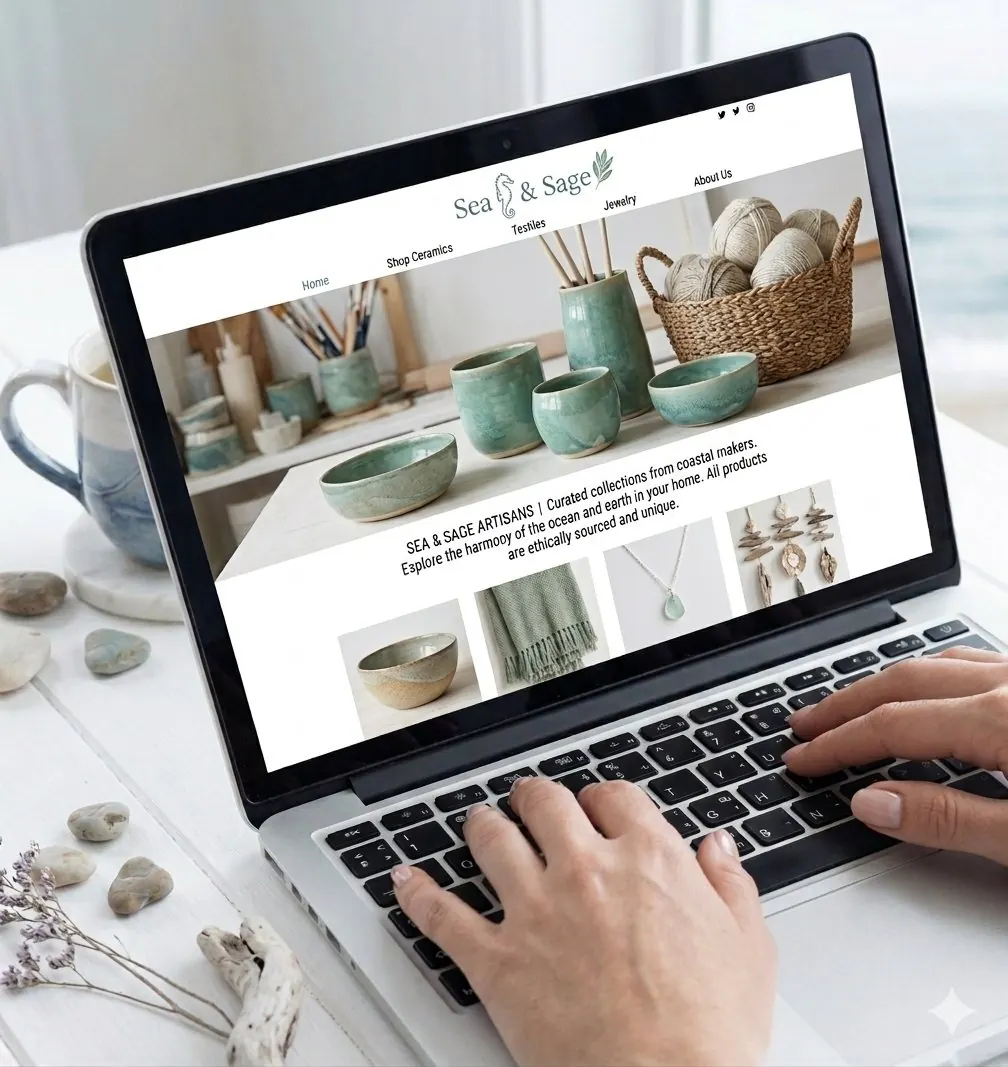
Why bother? Because your profile is your second homepage. For local searches it earns the click before your actual website does: it's the map pin, the stars, the call button, and for plenty of customers it is the only page of yours they will ever read. They'll find your hours there, judge your photos there, ring you from it, and never visit your website at all. And nine in ten of those local searches happen where you'd expect: Statcounter's July 2026 figures give Google 88.22% of the Australian search market. That makes the profile a shopfront on the country's busiest street, and most owners left theirs half-built.
Google's rules require the profile name to "reflect your business' real-world name", exactly as it appears on your signage and invoices. "Bayside Plumbing | Best Plumber Port Macquarie 24/7" is not a name, it's a suspension request. Keyword-stuffed names are one of the most common reasons profiles get taken down, and a suspended profile is a shopfront with the shutters welded down while you argue with a form. Fail this check and nothing else on the list matters until it's fixed.
The primary category is the biggest ranking lever on the profile, and it's set carelessly everywhere. Specific beats general: an emergency plumber categorised as "Plumber" is invisible for the searches that pay best. The audit step: search your service and town in a private window, open the three profiles in the map pack, and note their categories. That's the category language Google rewards in your area. Then check your own primary category is the single thing you most want to be found for, with additional categories covering the rest of what you honestly do.
Complete beats clever. This check is pure box-ticking, and it's where most of the easy ground gets gained:
You get 750 characters. The formula: who you are and where, what you do with your main keyword in the first sentence, who you serve, what makes you different, how to take the next step. Written like you'd say it across a table, read aloud once before saving. The kit includes a fill-in template, though the read-aloud test does most of the work.
Bare profiles and stock photos read as closed or fake. The audit standard is eight real photos minimum: logo, a cover that looks like your actual business, your face (people buy from people, and it's the photo competitors are too shy to add), three or more of your real work, and a couple of local-proof shots. Then two fresh photos a month, forever. A profile that hasn't visibly changed in months looks abandoned to the exact person deciding whether to call.
Reviews and your replies are the profile's growth engine, and there's a right way to ask that stays inside Google's rules and Australian consumer law:
I've written the exact ask script into the kit, and it's the same honesty-first framework I use for my own business.
Open your profile and answer honestly: when did anything last change? The maintenance that keeps a profile alive is one post and two photos a month plus review replies, about 15 minutes. That's three hours a year to outrank set-and-forget competitors, which is the best hourly rate in marketing. Do the arithmetic on the alternative too: if the profile brings even one extra $400 job a quarter, those three hours return $1,600 a year. Diarise it or it won't happen.
| Check | What good looks like | Where to fix it |
|---|---|---|
| Name | Your real-world name, nothing added | Profile: edit name (carefully; changes can trigger re-verification) |
| Primary category | The specific thing you most want found | Profile: business category |
| Details & services | Exact, consistent, attributes on, services priced | Profile: info, attributes, services |
| Description | 750 characters, keyword in the first sentence, human | Profile: description |
| Photos | Eight real ones, two added monthly | Profile: photos |
| Reviews | Asked honestly, every one replied to | Your saved review link + reply habit |
| Freshness | Something new every month | 15-minute calendar appointment |
One update worth knowing before you audit anything: Google removed the public questions-and-answers section from Business Profiles. The feature was discontinued from November 2025 and replaced with AI-generated answers that draw on your profile details, services, posts, reviews and website. You can't seed answers anymore; you feed the machine instead. Every check above is exactly that feeding, and it reaches further than the map pack: HubSpot's January 2026 research measured leads arriving via AI search converting 3 times better than its average lead. If you want the wider picture of being found by AI assistants, my guide to why businesses don't show up on Google covers the whole system.
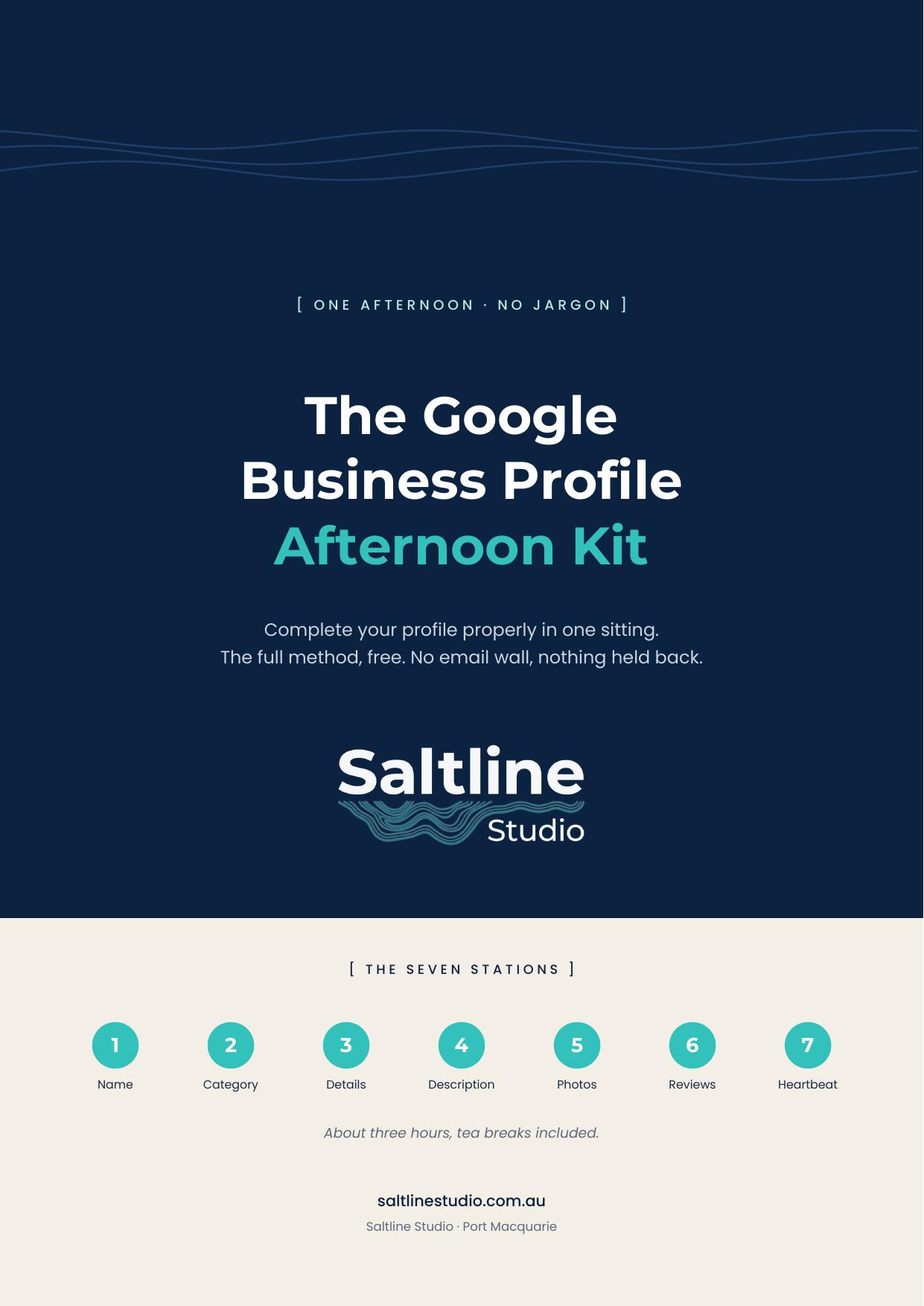
The do-it-yourself version is the Google Business Profile Afternoon Kit: all seven checks as checklists, the description template, the review ask script, and a score-yourself card out of 100. Free, no email required, yours with my blessing. It is the complete method, not a teaser.
If you'd rather know than spend the afternoon: The Found Report audits your profile alongside everything else you own online, every page of your website, your socials, your speed, and live tests of whether ChatGPT and Gemini name you. $550 flat, five business days. And if the monthly heartbeat is the part you'll never get to, profile care is built into my organic growth partnership at $1,200 a month, where your profile becomes my 15 minutes instead of yours. Whichever way you go, don't leave the shopfront half-built. It's the first thing your next customer sees.

Founder & digital marketing specialist at Saltline Studio, Port Macquarie. Helping small businesses grow with custom websites and organic search.